🌙 📖 Dream Guide
What Is a Dream?
What is a dream, how is it formed, and why do we dream? An Islamic, psychological, and scientific definition of dreams, their history, and their meaning in our lives.
9 min read
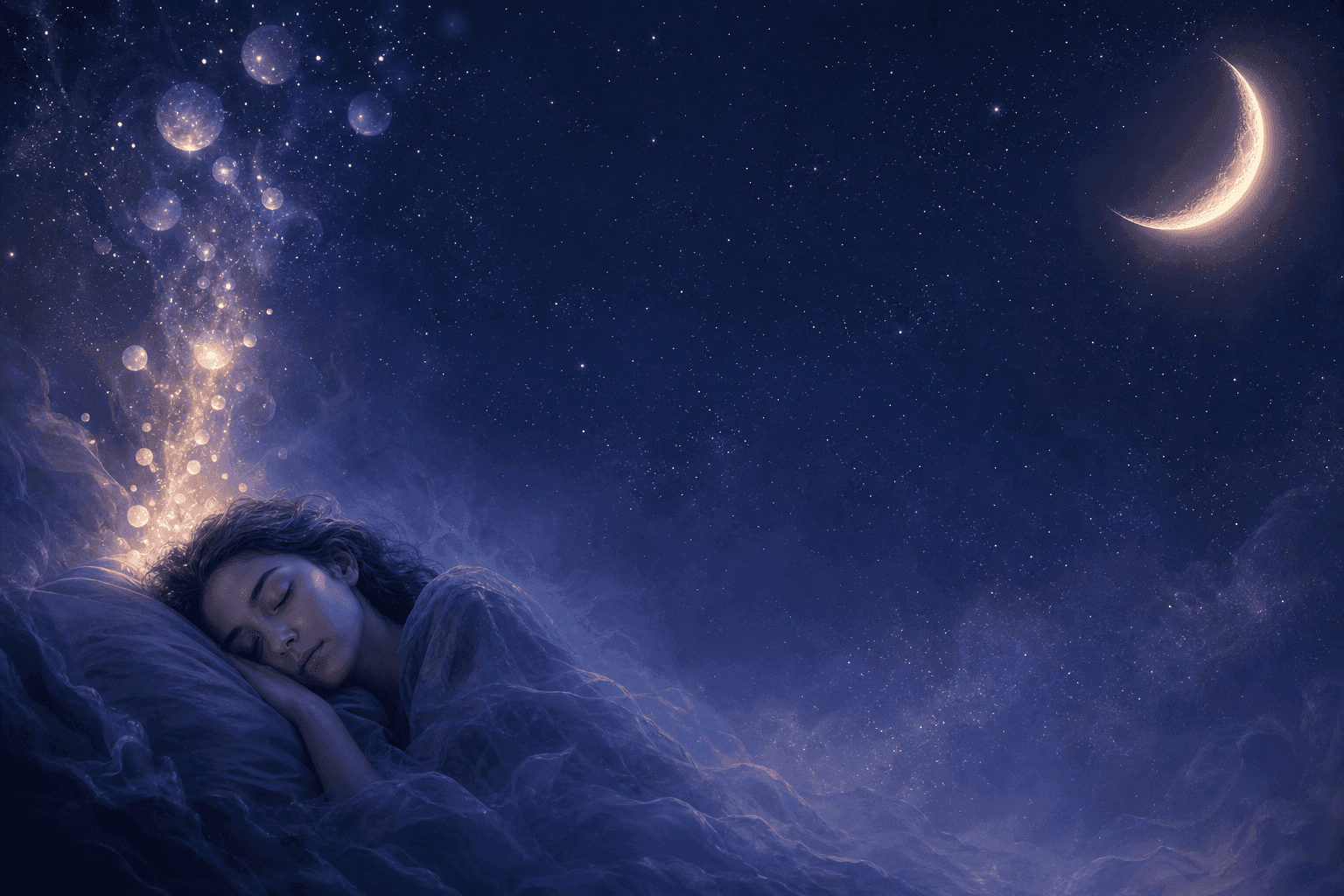
A dream is the tapestry of images, sounds, emotions, and thoughts that consciousness produces during sleep. The question "what is a dream?" - one of humanity's oldest - has been answered by religion, philosophy, psychology, and neuroscience in different ways. This guide examines the definition, history, types, and everyday meaning of dreams from both Islamic and modern perspectives.
The Definition of a Dream
A dream is the collection of visual, auditory, and emotional experiences the brain produces during sleep, particularly during the REM (Rapid Eye Movement) phase. The dreamer experiences events as if they were real and recognizes them as a conscious experience only upon waking. In modern science, dreams are described as a by-product of the brain's nightly work of organizing emotional memory, solving problems, and consolidating information.
In the Islamic tradition, dreams carry a much broader meaning. The Prophet Muhammad (PBUH) described righteous dreams as "one of the forty-six parts of prophethood" and emphasized that dreams are not merely a neurological event but can also be a channel of divine communication. Classical sources therefore divide dreams into three layers: true dreams from God, ordinary dreams from the self, and frightening dreams from the devil.
The History of Dream Interpretation
Dream interpretation was regarded as a sacred practice in ancient Egyptian, Greek, and Mesopotamian civilizations. The Egyptians viewed dreams as messages from the gods and held "dream incubation" rituals in their temples. In ancient Greece, Artemidorus produced the Western world's first systematic book of dream interpretation in the 2nd century CE with his work *Oneirocritica*.
In the Islamic tradition, the dream-interpreting gift of Prophet Yusuf (Joseph) is recounted in detail in the Quran, lending religious legitimacy to dream interpretation. The classical Islamic dream interpretation tradition - beginning with Ibn Sirin (653-729) and continuing through Nablusi (1641-1731) and Ja'far al-Sadiq - became a distinct branch of knowledge.
The Islamic View of Dreams
According to the hadiths of the Prophet Muhammad (PBUH), dreams fall into three categories: true (ruya saliba), of the self, and satanic dreams. A true dream is a notification from God and is generally seen in the early dawn hours, vividly and impactfully. A self-dream reflects the thoughts and emotions of the day; it does not require interpretation. Satanic dreams contain fear and anxiety; the hadith advises not telling these dreams to anyone, spitting lightly to the left three times, and seeking refuge in God.
For a deeper Islamic perspective see our Islam and Dreams guide; to understand how dream types differ in practice, see About Istikhara.
The Psychological View of Dreams
In modern psychology, Sigmund Freud described dreams as the language of the unconscious in his 1899 work *The Interpretation of Dreams* (Die Traumdeutung), arguing that dreams are the symbolic expression of repressed desires and impulses. Carl Jung, with his concepts of the collective unconscious and archetypes, approached dream symbols on a universal dimension.
Today cognitive neuroscience also studies the role of dreams in emotional memory consolidation and problem-solving. To go deeper see Dreams and the Subconscious and Psychological Dream Interpretation.
The Most Common Dreams
Some dream themes appear across cultures and are seen by nearly everyone. The most frequently searched dream interpretations include dreaming about teeth, dreaming about a snake, dreaming about water, dreaming about a dog, and dreaming about a baby.
If you keep seeing the same dream over and over, our Recurring Dreams guide examines the topic from both psychological and Islamic angles.
How Is a Dream Interpreted?
Accurate dream interpretation requires careful observation and a systematic approach. In the Islamic tradition the dreamer's condition, the time the dream occurred, and the context of the symbols are all evaluated together. Our How to Interpret Dreams page presents a 7-step practical process; for the classical sources see our Sources hub for Ibn Sirin, Nablusi, Jung, and Freud's methodologies.
Frequently Asked Questions
What is a dream, in short?
A dream is the visual, auditory, and emotional experience the brain produces during sleep, especially in the REM phase. In Islamic tradition, true revelations from God during sleep are also called dreams.
Does every dream have a meaning?
No. According to Islamic tradition, dreams fall into three categories: true, self, and satanic. Only true dreams call for interpretation; self and satanic dreams generally are not interpreted. Modern psychology also views most dreams as the daily reflection of the unconscious.
Do dreams come true?
True dreams are generally seen in the early dawn hours and have clear content. The Prophet Muhammad (PBUH) said "toward the end of time, the believer's dream will hardly be false." Science has shown that some events in dreams are produced from cues the brain processes without our awareness.
What is the scientific basis of dreams?
Dreams form during the REM phase, in the brain's processes of organizing emotional memory and consolidating daily information. Neuroscience research shows dreams are functional for problem-solving, creativity, and emotional regulation.
How often do we dream?
Science has shown that every person sees 3-6 dreams per night, though most are not remembered. Whether dreams are remembered depends on the moment of waking and on sleep quality.
Related Dream Meanings
Related Sources and Scholars
Related Guides
Interpret Your Dream with AI
Our AI-powered system analyzes your dream using Islamic and psychological sources.
🌙 Free Dream Interpretation