✨ ✨ Dream Facts
Facts About Dreams
Surprising scientific and historical facts about dreams. How the brain dreams, why everyone dreams, and common misconceptions.
6 min read
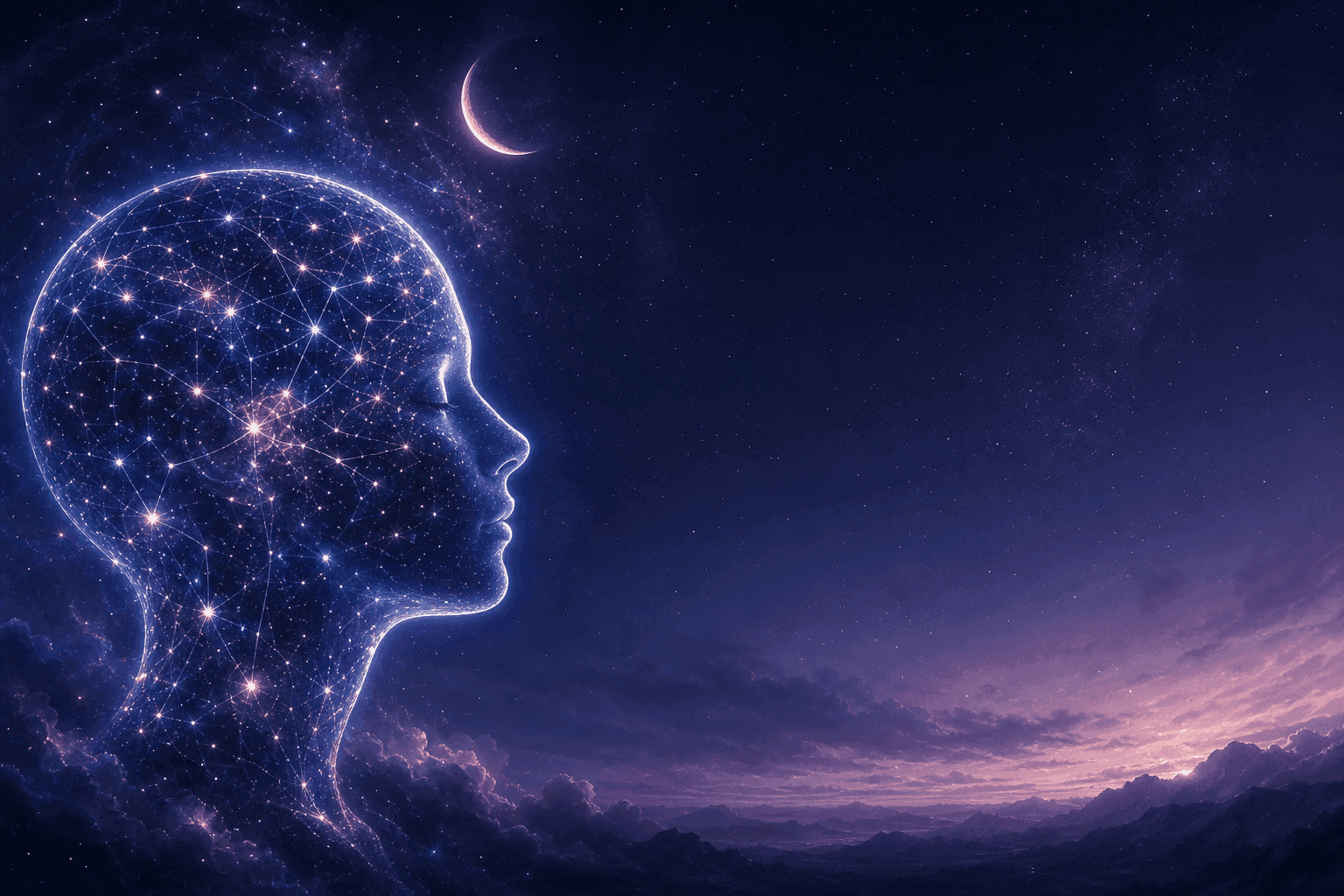
Dreams have been one of humanity's greatest mysteries for thousands of years. This guide gathers the most-asked scientific and historical facts about dreams, common misconceptions, and especially intriguing details carried into the present from the Turkish-Islamic tradition.
Everyone Dreams Every Night
Science clearly shows: people dream every night. Even those who say "I don't dream" have been shown to dream and simply not remember. Recall depends on the moment of waking, how soon after a REM episode it occurs, and on sleep quality.
On average, 3-6 separate dreams occur in one night, each lasting between 5 and 45 minutes.
Are Dreams in Color or Black-and-White?
Most dreams are in color. An interesting study found that people who grew up watching black-and-white television were more likely to remember their dreams as black-and-white, suggesting that dream recall is shaped by culture and media.
Blind People Dream Too
People born blind dream more in sound, smell, touch, and emotion than in vision. Those who lose sight later continue to use the visual memory acquired before blindness in their dreams.
"Snorers Don't Dream" (Myth)
This is a common myth but is not true. Snoring is respiratory and can disrupt REM but does not eliminate it. Even those with severe sleep apnea, despite shortened REM, still dream.
Dream Interpretation Is Thousands of Years Old
One of the oldest written documents in human history, the "Chester Beatty III" papyrus (circa 1300 BCE), contains 108 dream interpretations from ancient Egypt. The papyrus is strikingly similar to modern dream interpretation books.
In the Islamic tradition, the works of scholars like Ibn Sirin and Nablusi continue to be used to this day.
Dreams Affect Our Daily Lives
Modern psychology has repeatedly shown that nightmare sufferers are more anxious during the day, while those with happy dreams are in a more positive emotional state. That is why managing recurring nightmares matters for psychological health. See Recurring Dreams for a deep dive.
Discoveries Born in Dreams
Many scientific and artistic discoveries were inspired by dreams:
- The order of the periodic table came to Mendeleev in a dream.
- The needle-eye design of the sewing machine came to Elias Howe in a dream.
- Paul McCartney heard the melody of "Yesterday" in a dream.
- Mary Shelley's *Frankenstein* was born from a dream.
Nightmare Statistics
About 50% of adults have at least one nightmare per year; 2-8% experience more than one nightmare per week. The rate is higher in children; 75% of children aged 6-10 have experienced at least one nightmare.
Nightmare frequency increases markedly under stress, with certain medications (especially some antidepressants), during alcohol withdrawal, and after trauma. For treatment-resistant nightmares, imagery rehearsal therapy is clinically effective. Our Recurring Dreams page covers this in detail.
Sleep Paralysis and Hallucinations
About 20% of adults experience sleep paralysis at least once in their lifetime. Sleep paralysis is the temporary spillover of REM-stage muscle atonia into wakefulness; it can last seconds to minutes.
During sleep paralysis, 30-40% of episodes include visual or auditory hallucinations. The classic hallucination type known across cultures (the "old hag" in English, the "karabasan" in Turkish) is a well-known and medically understood phenomenon. It is largely preventable with regular sleep schedules and stress management.
Frequently Asked Questions
Does everyone dream every night?
Yes. Science has shown that every healthy person sees 3-6 dreams a night. Saying "I don't dream" actually means "I don't remember my dreams."
Does time in a dream pass at the same rate as in real life?
Generally yes. Science shows the time felt in a dream is close to real time; some intense dreams leave a "long" feeling but actually last only a few minutes.
Why do I forget my dream so quickly upon waking?
Memory consolidation does not engage immediately after exiting REM, so dream content fades from short-term memory. Lying still for a few seconds and rehearsing details on waking significantly improves recall.
Can dreams predict the future?
The Islamic tradition accepts the concept of true dreams; modern science says most dreams concern the processing of past and present emotion. The "I saw it before" feeling sometimes results from inferences the unconscious draws from cues we did not consciously notice.
Related Dream Meanings
Related Sources and Scholars
Related Guides
Interpret Your Dream with AI
Our AI-powered system analyzes your dream using Islamic and psychological sources.
🌙 Free Dream Interpretation